Insights from the Front Lines of Great Power Competition
The rules-based international order that defined the post-Cold War era is unravelling before our eyes. What we’re witnessing isn’t a temporary spike in uncertainty but a fundamental shift in the global power structure. As Sir Alex Younger, former head of MI6, told Enodo clients in November 2023: “This is our new normal. The last 30 years were the aberration.”
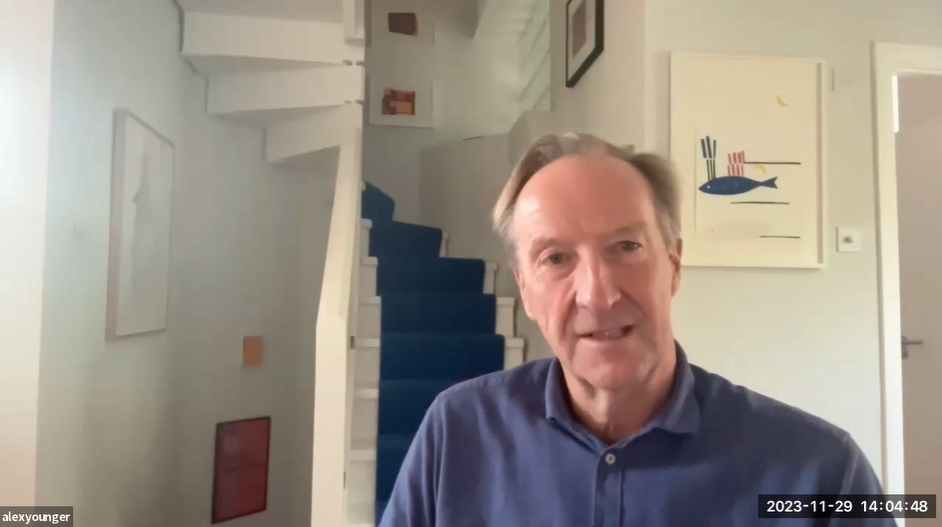
That assessment, delivered months before many recognised the depth of the transformation underway, exemplifies the calibre of strategic foresight Enodo brings to our clients through exclusive conversations with some of the world’s most informed minds on geopolitical trends and global security challenges.
Unlock Critical Insights: Gain exclusive access to Enodo’s game-changing analysis and expert network, and understand how this issue will reshape your world. Click below to register for a TRIAL ACCESS to our premium research.

The Axis of Upheaval Takes Shape
Fast forward to September 2025, and Younger’s warning has materialised with startling clarity. China’s massive military parade commemorating World War II’s 80th anniversary wasn’t just pageantry, it was a demonstration of intent. Xi Jinping stood alongside Vladimir Putin, Kim Jong-un, and Iran’s President Masoud Pezeshkian, forming what observers now call the “axis of upheaval.” This unprecedented quartet signals the crystallisation of an alternative power structure challenging US hegemony and the world order established after 1945.
The parade showcased China’s first public unveiling of its nuclear triad, hypersonic weapons, and integrated information warfare capabilities. But the real message transcended military hardware. Xi’s words were unambiguous: “The rejuvenation of the Chinese nation is unstoppable.” His Global Governance Initiative, announced at the Shanghai Cooperation Organization (SCO) summit days earlier, laid out Beijing’s vision for remaking international institutions in its favour.
US-China Strategic Competition: Reading the Signal Through the Noise
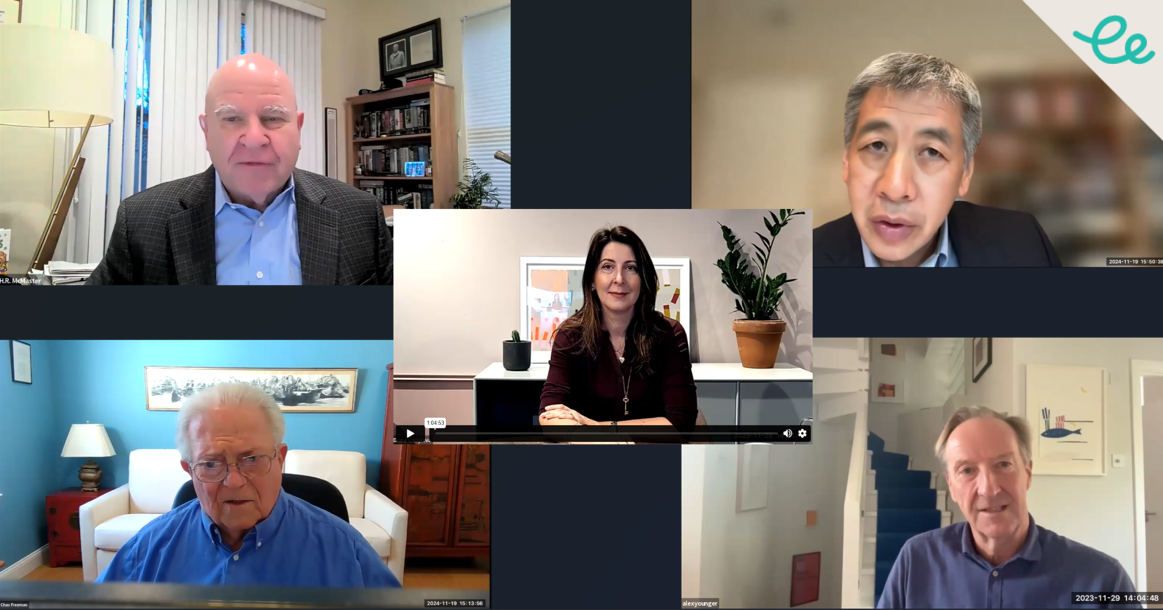
Understanding this evolving US-China rivalry requires cutting through both performative rhetoric and genuine strategic intent – a distinction that proved critical when Lieutenant General H.R. McMaster, former National Security Advisor, joined Enodo in February 2025 to decode President Trump’s decision-making process.
McMaster’s guidance on Trump was prescient: “Take him seriously but not literally.” When Trump made outlandish statements about Gaza or Greenland, McMaster explained, there was usually a strategic objective buried beneath the provocation. That framework proved invaluable for anticipating US foreign policy directions in Trump’s second term.
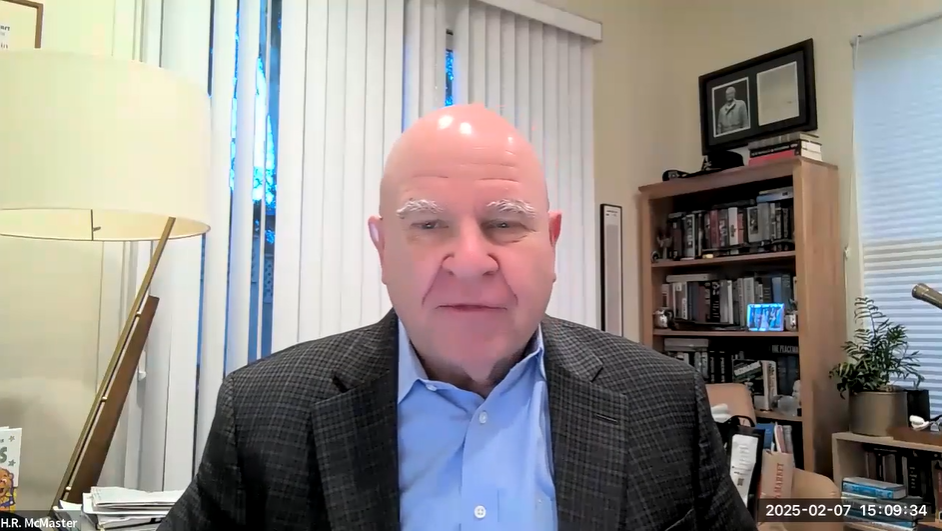
More significantly, McMaster assessed the probability of an Israeli and US strike on Iran’s nuclear program at 75% within the year, rising to 95% within three years. That prediction – made while others focused on Trump’s unpredictability – demonstrated the value of insider expertise in forecasting regional conflicts and global security challenges. Those who attended McMaster’s session would have been better positioned than most analysts when tensions with Iran escalated.
On China-US relations, McMaster was equally direct: expect a “rending of the economic relationship” driven by the Chinese Communist Party’s behaviour. He advocated for secondary sanctions on Chinese banks, expanding entities lists, and a fundamental recognition that China sits at the center of an axis including Russia, Iran, and North Korea – all working to undermine the free world.
Taiwan: The Flashpoint That Could Reshape Everything
Perhaps no issue better illustrates the stakes of great power rivalry than Taiwan. When Chas W. Freeman Jr.—Nixon’s interpreter during the historic 1972 opening to China and later a distinguished diplomat who served as Assistant Secretary of Defense – joined Enodo alongside Professor Tai Ming Cheung in November 2024, they provided a sobering analysis that differed markedly from mainstream optimism.
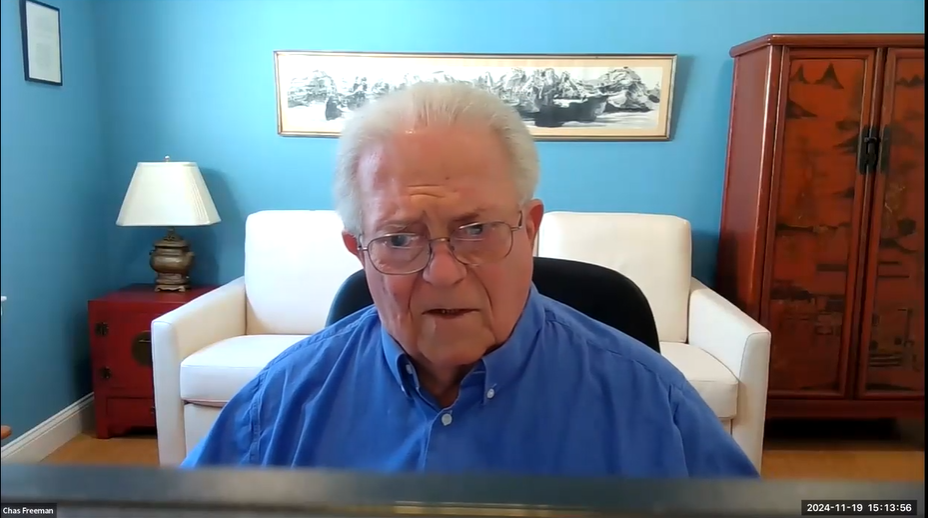
Freeman assessed the probability of conflict over Taiwan at around 50% within five years. Tai Ming Cheung, who has spent years analysing China’s political economy of militarisation, placed it at 30-35%, noting that “we are in a period of militarised competition, and war is still quite a number of steps away.” Yet both emphasised that China has fundamentally shifted from peacetime military modernisation to preparing its entire economy for potential conflict – a transformation that began around 2020.
Their discussion revealed how China’s “national strategic integration” goes far beyond traditional military-civil fusion. Xi Jinping has placed four defence industry members on the Politburo – 17% of its membership. Beijing is tapping capital markets through asset securitisation and government guidance funds to finance defence industrialisation that official budgets cannot sustain. Meanwhile, the United States isn’t matching these efforts to reform its economy or society for sustained competition.
The question isn’t whether China is preparing for war over Taiwan – it demonstrably is. The question is whether that preparation reflects inevitability or insurance. Freeman noted that China has “almost nothing left to offer Taiwan,” so it must convince Taipei of “dire consequences for not negotiating.” Yet every time China intimidates Taiwan, US support increases, creating a dangerous dynamic.
Given the rapidly evolving situation across the Taiwan Strait, we’re particularly excited to continue this critical conversation in our upcoming webinar with a US expert who brings unique insider insight into how Washington and Beijing are calculating their next moves—a discussion that promises to be essential for anyone trying to navigate the most dangerous flashpoint in global affairs.
The Russia-Ukraine Laboratory
Sir Alex Younger’s November 2023 insights on Ukraine have aged remarkably well. He predicted stalemate absent significant escalation in Western military support – precisely what materialised over the following 18 months. He identified Russia’s strategic calculation: Iran-backed proxies provide Moscow cheap ways to make Western commitments expensive, while the Ukraine conflict itself diverts American attention and resources.
More importantly, Younger highlighted Europe’s precarious position in this new era. While praising Europe’s initially “magnificent” response, he warned that ownership of the Ukraine problem was shifting toward Europe regardless of who occupied the White House. European nations, he argued, must organise not just to win the war but to win the peace – including reconstruction and security guarantees.
That analysis preceded McMaster’s February 2025 assessment that Russia’s army stands at breaking point, spending nearly 10% of GDP on defence unsustainably. McMaster estimated high likelihood of ceasefire but low probability of lasting peace, recommending that Trump bolster Ukraine through long-term, low-interest loans for US weapons. So far the ceasefire has not materialised, Russia has made no strategically significant gains and the conflict is stalemated. The US has not walked away but has made it clear that it expects Europe to bear the brunt of continuing support for Ukraine.
The Multipolar Reality: Not What We Expected
One of the most valuable insights from these Enodo conversations concerns the nature of emerging multipolarity. Diana Choyleva’s discussions with both Freeman and McMaster revealed that we’re not heading toward equally balanced poles of power. Instead, we’re witnessing a bipolar US-China confrontation alongside growing autonomy among middle powers.
Freeman noted that Saudi Arabia, Turkey, Japan, and others are “becoming more autonomous in their decision-making and more competitive internationally.” The demise of institutions like the WTO – “which the United States has sabotaged,” Freeman observed – is accelerating this trend. The BRICS grouping isn’t an alliance or organisation but a forum, an alternative to UN-dominated discourse.
This creates what Freeman described as a “much more complex international monetary system in which there will be many actors, many currencies, and many forms of trade settlement.” The US imposes sanctions and political conditions; China doesn’t. The result? “The drift away from American leadership, the end of Pax Americana, is well advanced.”
Yet this isn’t simple Chinese hegemony replacing American dominance. McMaster emphasized that China’s objective is “rejuvenation of the Chinese nation” and international respect – which will have the effect of making China dominant but isn’t explicitly framed as seeking global hegemony. The distinction matters for understanding how China engages with global South diplomacy and institutions like the SCO.
Technology: The Real Battlefield
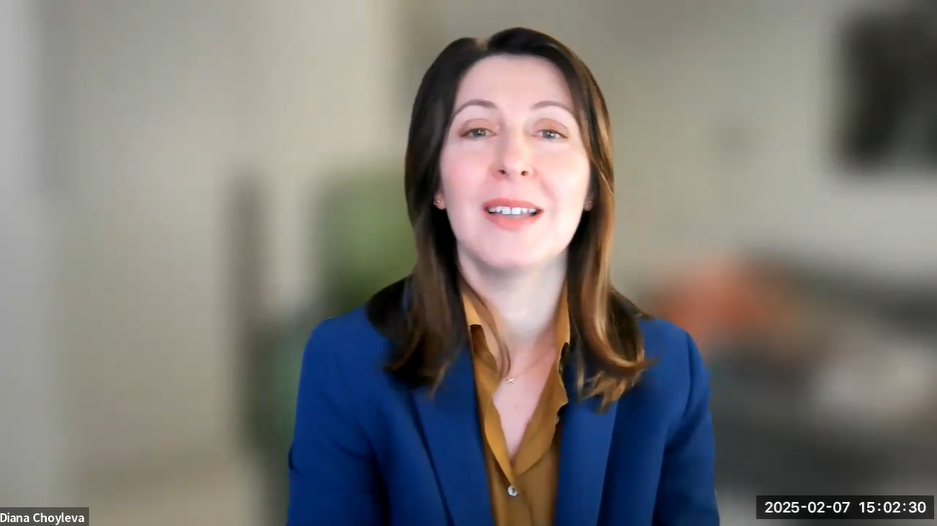
Running through all these conversations is recognition that technology will determine which system prevails. As Diana Choyleva noted, whoever wins the technology race in emerging fields becomes the future global hegemon. Xi Jinping understands this perfectly – dominating key technologies provides critical advantages for surveilling populations, generating productivity leaps, and creating dependencies.
The US has awakened to this challenge, responding with industrial policy through initiatives like the IRA. Yet Younger worried that Europe’s “precautionary principle” approach to innovation favours incumbents over next-generation companies. McMaster stressed that successful competition requires a “whole free world approach” – leveraging allied strengths in shipbuilding, manufacturing, and innovation rather than going it alone.
The technology race extends beyond current capabilities to breakthrough innovations that could reshape the competitive landscape entirely. At Enodo, we’re bringing together leading experts to explore three transformative technologies: graphene and 2D semiconductors, where the UK has a genuine opportunity to leapfrog silicon-based computing; fusion technology, which could revolutionize energy production and fundamentally alter geopolitical dependencies on fossil fuels; and robotics, where China’s ambitions to dominate could define the next phase of manufacturing and military capability. These are technologies being developed now, with profound implications for which nations lead in the coming decades.
The Value of Strategic Intelligence
What unites these Enodo conversations is their consistent ability to cut through noise and identify genuine strategic dynamics before they become obvious. When Younger said in November 2023 that we faced a fundamental shift rather than a spike in uncertainty, it wasn’t yet consensus. When McMaster predicted high probability of strikes on Iran months before tensions peaked, markets weren’t pricing that risk. When Freeman and Tai Ming Cheung detailed China’s whole-of-economy mobilisation for potential conflict, most analysts focused on immediate tactical developments.
This is the value of accessing minds that have operated at the highest levels of national security decision-making, who understand not just what leaders say but how they think and decide. It’s the difference between reacting to headlines and anticipating developments.
The international power shifts we’re witnessing will define this century. The US-China relations trajectory, the evolution of regional conflicts, the reorganisation of global institutions – these aren’t abstract policy debates. They’re determinants of investment flows, supply chain viability, and ultimately economic prosperity.
Those who understand these dynamics early, who can distinguish signal from noise in great power rivalry, who grasp both the military and political economy dimensions of strategic competition – they will navigate this turbulent era more successfully than those flying blind.
The new geopolitical normal isn’t what we wanted. But it’s the world we have. And understanding it clearly, without illusions, is the first step to thriving within it.
Unlock Critical Insights: Gain exclusive access to Enodo’s game-changing analysis and expert network, and understand how this issue will reshape your world. Click below to register for a TRIAL ACCESS to our premium research.