A blog post by Enodo Economics’ Founder and Chief Economist, Diana Choyleva.
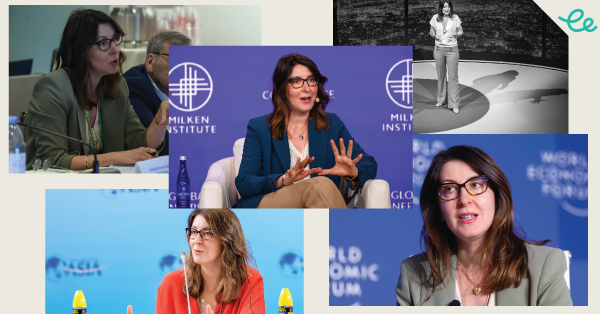
Over the past few months, I’ve found myself in a rather unique position—one that’s revealed something deeply concerning about the current state of US–China relations. From moderating energy transition panels in tropical Hainan to discussing geopolitical risks in Beverly Hills, from addressing digital currency futures in Tianjin to delivering a keynote on The Great Decoupling in Paris, I’ve been witness to conversations happening at the highest levels of global decision-making.
What stood out wasn’t what was said in each room—but who wasn’t there. Across these global forums, the middle ground is vanishing. And with it, the most vital conversations.
If you would like to book Diana Choyleva to speak at your event, please send an inquiry to engagements@enodoeconomics.com
The Alarming Reality: We’re Not Talking to Each Other
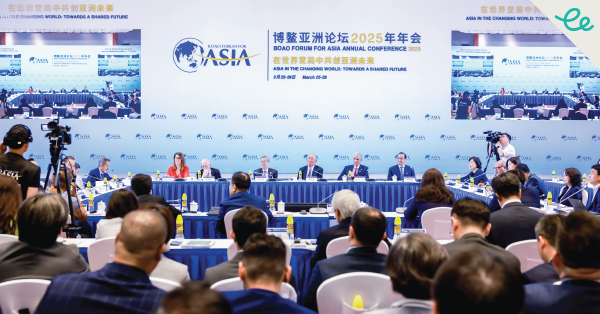
At the Boao Forum in March, I was moderating a panel on “Promoting Energy Transition in Asia” alongside luminaries like Henry Paulson, Zhou Xiaochuan, and Xie Zhenhua. The energy in the room was palpable—not just because we were discussing Asia’s green future, but because of the strategic pivot happening before our eyes. China was deepening its relationships with Southeast Asia, and the message was clear: they’ve given up on America.
Two months later, at the Milken Global Conference in Beverly Hills, I participated in sessions on “Balancing Strategic Competitiveness and Shared Prosperity” and “Global Investors’ View: China.” The conversations were sophisticated, the analysis sharp, but something was missing. Out of thousands of attendees across both forums, only two people attended both events—and I was one of them.

This isn’t just a scheduling coincidence. It’s a fundamental breakdown in dialogue that’s making Sino–US relations exponentially more dangerous.
The View from Beijing: Playing Hardball and Winning
At Boao, surrounded by the lush landscapes of Hainan Island, I watched Chinese policymakers make their calculations in real time. The strategy is clear: Beijing will build its own sphere of influence. Southeast Asia, and the Global South more generally, is the prize.
The China trade policy I witnessed wasn’t defensive—it was offensive. China no longer believes it can pacify America—and the gloves are off. They’re creating facts on the ground, from supply chain resilience initiatives to digital currency infrastructure that bypasses the dollar system entirely.
This isn’t the tentative Cold War 2.0 scenario many predicted. It’s something more sophisticated and potentially more destabilising.
The Dollar–Yuan Digital Battlefield
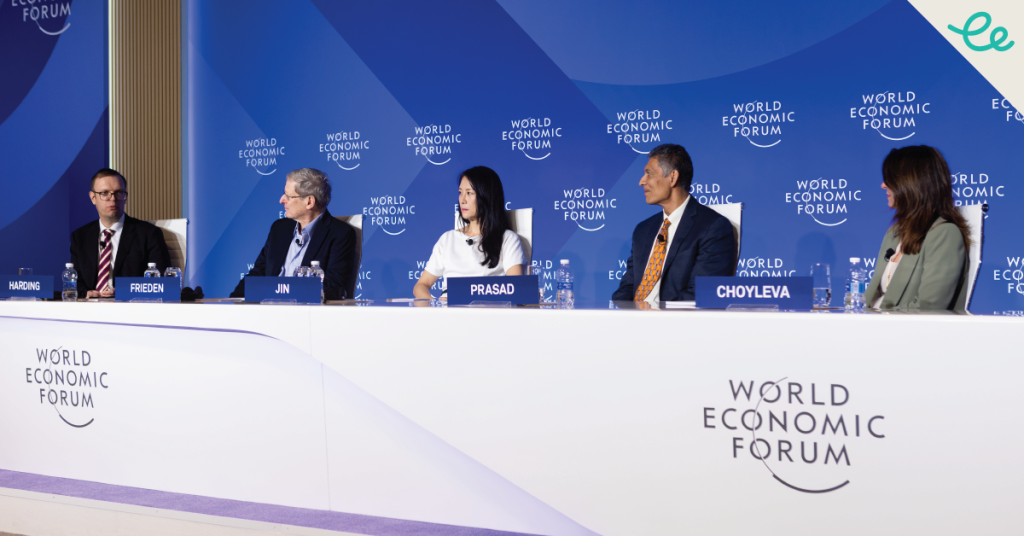
By June, speaking at the World Economic Forum in Tianjin about “Geopolitics and Currencies in Flux,” the technological dimension of this competition became crystal clear. The tech war isn’t just about semiconductors anymore—it’s also about the fundamental architecture of global payments.
Chinese imports to the US may have shifted due to tariffs and trade war tensions, but China’s response isn’t to capitulate. Instead, they’re building parallel systems. Digital currencies for cross-border payments could revolutionise global finance, and China is moving faster than most Western observers realise.
With Donald Trump’s 9 July announcement of sweeping new tariff measures—set to take effect from 1 August unless new trade deals are secured—the coming weeks will show whether the US is prepared to strategically manage this pivotal moment. The question isn’t just about tariff rates or product categories. It’s whether Washington can meaningfully persuade key economies to remain within the dollar-based global trading and financial system—or whether those countries will begin drifting more decisively into China’s orbit.
European Perspectives: Trapped in the Middle
Speaking at the annual AGM of Astorg—a leading pan-European private equity firm based in Paris—offered a stark window into Europe’s current predicament. At the conference (themed around cinema), I framed the US–China decoupling as an epic drama—but behind the metaphor, Europe is no passive viewer.

Donald Trump’s return to the White House has already jolted European capitals, forcing urgent action on defence, trade, and industrial policy. That shock has helped revive initiatives like NATO reform—but it’s also reopened wounds. Trust in the US feels fragile, with many leaders worrying America may again prove erratic or unreliable.
Simultaneously, China is leaning in harder, telling Europe it can’t accept Russia losing its war against Ukraine, yet somehow trying to court the continent as a strategic partner. These overtures have been shallow: no credible security framework, limited market access, minimal economic upside—little more than diplomatic pressure.
The result? Europe is squeezed between a bullying and unpredictable America and a self-interested China offering empty promises. The supply chain resilience strategies discussed in Paris weren’t signs of confident decoupling—they were contingency planning by a continent under strain.
Can Europe find a third way—one shaped by its own interests and values, not defined by Washington or pulled into Beijing’s orbit? With the geopolitical clock ticking, that remains the urgent, unanswered question.
The Trump Factor: Familiar Playbook, New Context
The return of Donald Trump to the presidency adds another layer of complexity. Trump’s previous approach to China combined unpredictability with transactional thinking. But the China he faces now is fundamentally different from 2017–2021.
Xi Jinping’s China has spent ten years preparing for this moment. They’ve diversified their economy, strengthened their domestic market, and built alternative partnerships. The Biden vs Trump China policy debate in Washington misses this crucial evolution.
All of this—the return of Trump, Beijing’s evolving posture—has left investors with more questions than answers.
What I’m Hearing from Investors
Across all these forums, from Milken to Boao to Summer Davos, investors are asking the same questions: How do we navigate this environment? What’s the real risk of escalation? How do we position for a world where the global economy changes beyond recognition?
The answers aren’t simple, and they’re certainly not the same for every market participant. What’s clear is that the old frameworks—assuming eventual convergence, betting on rational economic incentives to prevent conflict—are no longer sufficient.
The Speaking Circuit Insight
My experience as a global thought leader navigating these forums has taught me something crucial about high-impact communication in today’s environment. The most valuable insights come not from any single conversation, but from understanding how different audiences in different contexts are processing the same information.
To be effective on today’s speaking circuit, you need to be trusted in both Beijing and Washington—an increasingly rare and valuable position. The speakers who stand out aren’t the loudest voices, but those offering nuance, context, and the ability to engage across divides.
The Vanishing Middle Ground
What concerns me most is the disappearance of people and institutions that can bridge these divides. The forums I’ve attended represent the highest levels of global decision-making, yet they’re increasingly populated by different people having different conversations.
This isn’t just about US foreign policy on China or Chinese policy toward America. It’s about the fundamental architecture of global dialogue breaking down just when we need it most.
Looking Forward: The Need for Informed Dialogue
The technology competition will only intensify. Supply chains will continue to fragment. Trade patterns will keep shifting. But the biggest risk isn’t economic—it’s the collapse of communication channels that might prevent these trends from becoming catastrophic.
In my keynote at Astorg, I compared this moment to cinema’s greatest epics—competing visions of the future battling for dominance. But unlike in movies, we don’t get to be passive observers. Every business leader, every investor, every policymaker is an actor in this unfolding drama.
The question isn’t whether you’ll be affected by these changes—you will be. The question is whether you’ll understand them well enough to navigate them successfully.
The Value of Cross-Continental Perspective
Over the past few months, these speaking engagements have reinforced something I’ve long believed: the most valuable insights come from understanding how different audiences process the same information. Whether moderating panels on energy transition in Hainan or discussing currency competition in Tianjin, the real value lies in synthesising these perspectives into actionable intelligence.
Several institutions have told me that framing these complex geopolitical dynamics specifically for their investment teams or client base led to richer discussions and clearer strategic thinking. There’s something powerful about live, candid conversations that cut through the noise—especially when it comes to understanding the nuances of this evolving relationship.
If you or your team would benefit from a tailored conversation like this—whether for internal strategy sessions or client-facing events—I’m always happy to explore how I can support those discussions.
The credits haven’t rolled on this geopolitical drama yet. The decisions made in the coming months will determine whether we’re watching a story of managed competition or dangerous escalation. Understanding the full picture requires listening to voices from both sides of the Pacific—and that’s exactly what I’m positioned to provide.
If you would like to book Diana Choyleva to speak at your event, please send an inquiry to engagements@enodoeconomics.com