Iran war · Strait of Hormuz · Geopolitical risk · Global markets
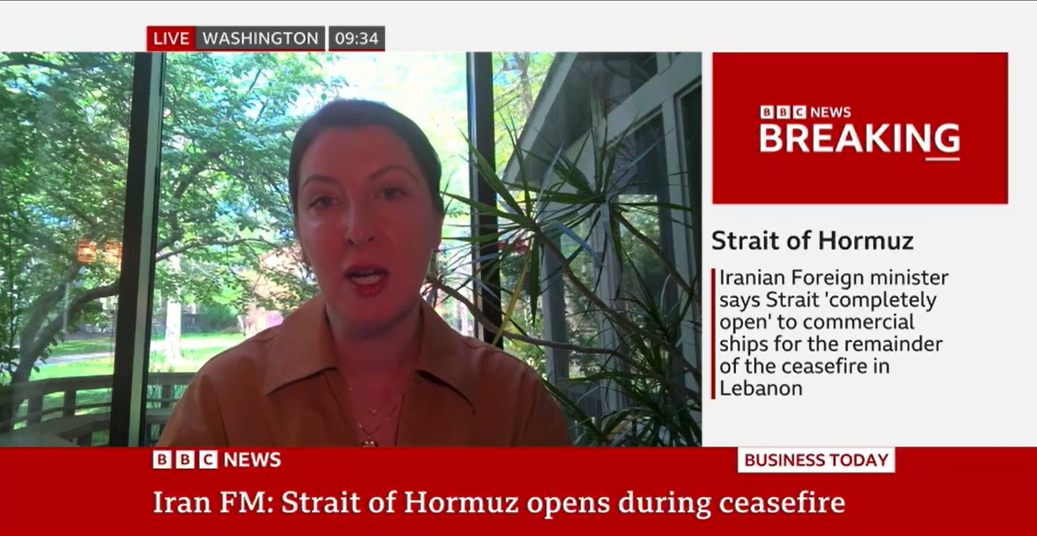
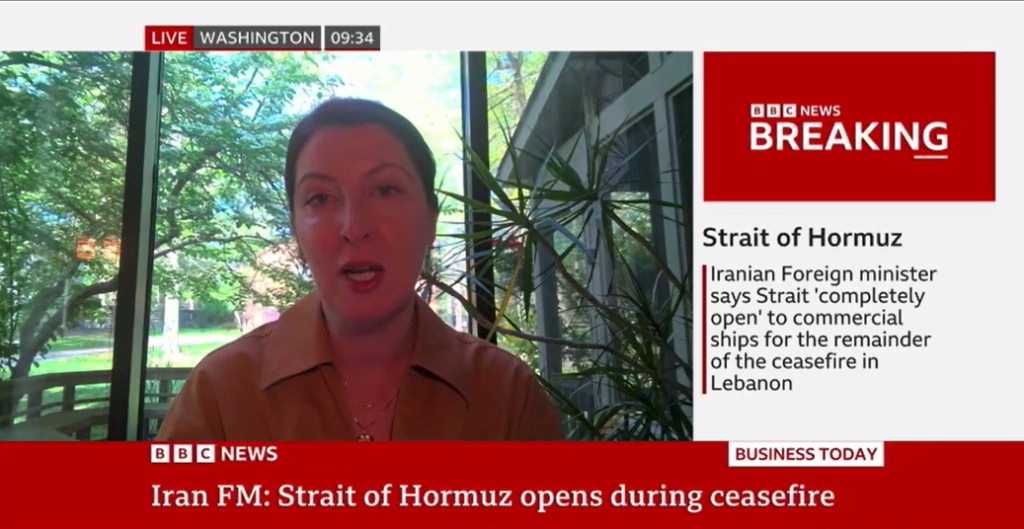
Sixty-nine days after the US-Israel air campaign against Iran began, the Strait of Hormuz remains effectively closed. A dual blockade is in place: Iran is controlling access to the Gulf, while the US Navy continues to blockade Iranian ports. Iran’s new supreme leader has vowed to retain control of the strait and to abandon neither the nuclear programme nor missile technology. Ship traffic through the world’s most consequential chokepoint remains at only a fraction of pre-war levels. The ceasefire agreed in early April is holding in name only.
I want to use this moment to explain how Enodo saw this coming — and why that matters for every investor who has ever told me, “We don’t really invest in China, so we don’t need you.”
Putting the Pieces of the Puzzle Together
The war did not come from nowhere. Iran had been engaged in a sustained proxy conflict with Israel and its Arab neighbours for decades. By the mid-2020s, its nuclear programme was advancing in ways that created a rapidly closing window for any effective strike. By late 2025, Iran was structurally weaker than at any point in recent memory — Hezbollah degraded, Assad gone, the economy hollowed out by sanctions, and domestic legitimacy eroding.
The June 2025 Twelve-Day War made the decisive difference: it established that direct Iran-Israel warfare was possible, not merely proxy conflict. Israel struck Iranian nuclear and military facilities; the US became indirectly involved; the conflict ended in a fragile ceasefire with the core issues entirely unresolved. It permanently shifted the threshold for what both sides were prepared to do. But could this be a dress rehearsal for something bigger?
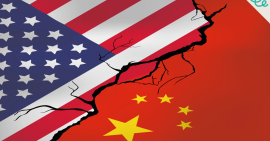
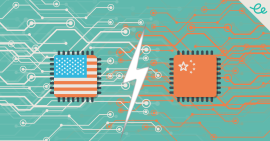
At Enodo, we had the broader architecture in view. We have argued for nearly a decade — since we coined the term “The Great Decoupling” in 2017-18 — that great power competition between the United States and China is the defining force reshaping the global order.
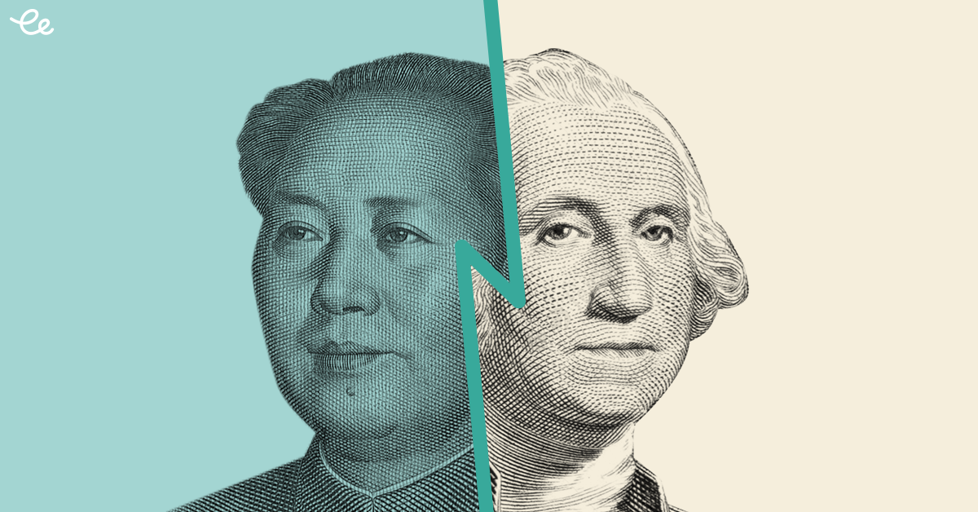
That framework does not predict individual events. What it does is make you comfortable assigning serious probability to outcomes that consensus treats as extreme. When you are already working from the premise that the post-Cold War order is fracturing — that financial architecture, energy systems, technology supply chains and security alliances are all simultaneously in flux — you are more prepared to accept that major disruptions are not going to be the exception. That, and growing up during the collapse of communism in Bulgaria, which taught me early that systems can collapse and change beyond recognition.
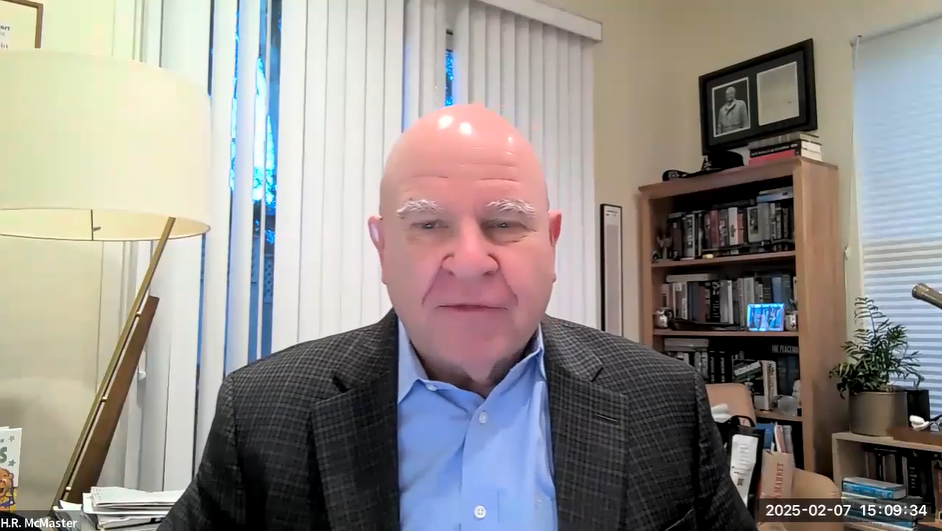
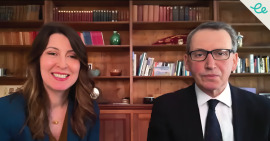
On 10 February 2025, I interviewed Lieutenant General H.R. McMaster for Enodo’s special webinar on Trump’s second term. As the former US National Security Advisor who had sat across the table from the world’s most dangerous leaders, he was uniquely positioned to discuss what to expect from Trump 2.0. We covered a great deal of ground, but then came my unannounced question, putting him on the spot. I asked him about the probability of an Israeli and/or US strike on Iran’s nuclear programme. His answer was unambiguous:
“If the question is either the United States or Israel, both. And if the time period is in the next years, I would say 95% chance.”
“And over the course of this year?”
“You know. Gosh, 75%. Well, above 50%.”
That was considerably higher than my own prior, and it sharpened my thinking immediately.
This is what the right trusted network gives you: not confirmation of what you already think, but the critical data point to add to your own framework of how you see the world.
Then came Trump’s tariff offensive, China’s rare earth retaliation, and Washington’s tactical retreat. I wrote at the time that the United States lacked a commensurate card to play. China could inflict surgical economic pain on specific US industries; Washington could only respond with measures that risked systemic escalation. That asymmetry was a structural feature of the competition — and it had direct implications for where America might choose to reassert leverage.
Meanwhile, on the Middle East side, after the Twelve-Day War came progressive US military deployments through the second half of 2025 — carrier strike groups, air assets, expanded basing agreements across the region.
I started to see this not as routine posturing but as preparation.
Failed nuclear diplomacy through the autumn confirmed the trajectory. And while the US was flexing its military muscles, Xi Jinping was engaged in an unprecedented reorganisation of the PLA that had left three of the five theatre commands without commanders and reduced the Central Military Commission to just two members — effectively hollowing out China’s chain of command at the very moment strategic decisions would need to be made.
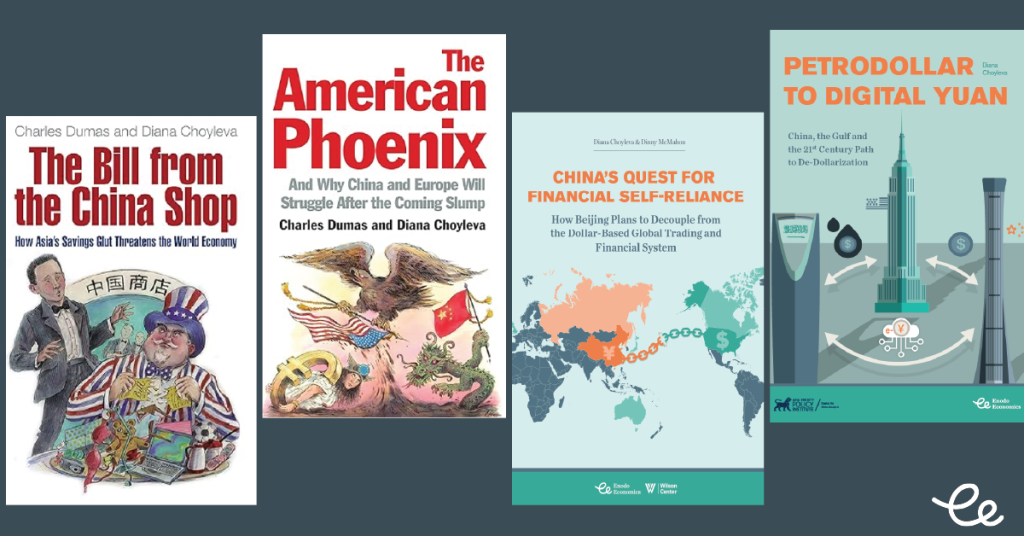
Then, in the early hours of 3 January 2026, US special forces carried out a large-scale operation in Caracas and extracted Nicolás Maduro. My immediate reaction was: Iran is next. Not because Venezuela and Iran are obviously connected — some saw this as America purely asserting control in its back yard — but because the structural logic was compelling. The Venezuela operation showed that this administration would act directly against authoritarian governments it judged to be in strategic decline. More importantly, Venezuela and Iran together gave the United States the oil card — the ability to disrupt and constrain China’s access to oil. And everything I had worked through writing Petrodollar to Digital Yuan: China, the Gulf and the 21st Century’s Path to De-dollarisation pointed to an even bigger play.
Control over the flow of Gulf energy is not incidental to America’s position in the dollar system. It is central to it.
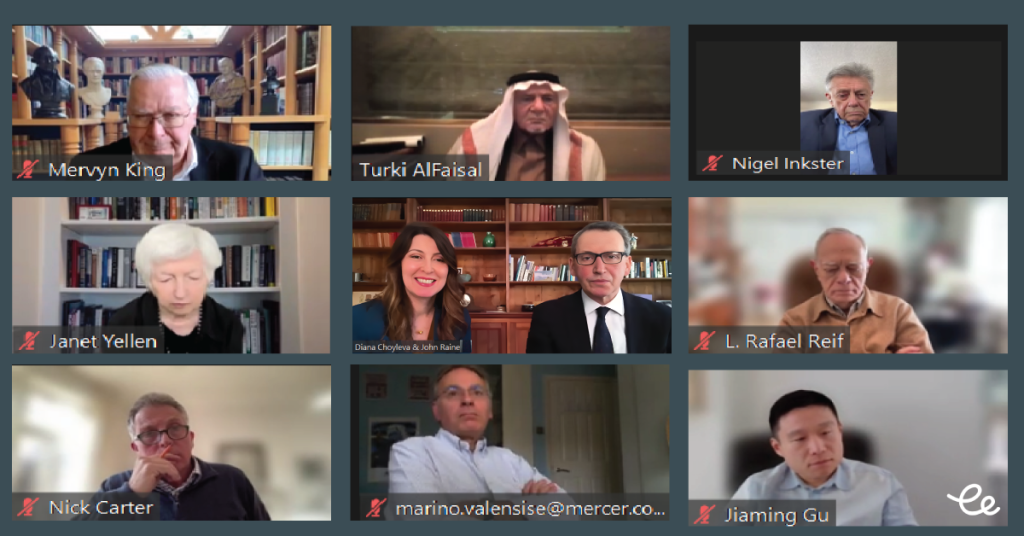
I told colleagues and clients that week that Iran was shaping up to be the key geopolitical risk of 2026. We had already scheduled the inaugural session of Enodo Consilium — to examine precisely this question: the likelihood of war over Iran, oil and the dollar. The date was 4 March. The war had started four days before we met.
Enodo’s Unique Forecasting Framework
This brings me to the investor who tells me they don’t need Enodo because they don’t invest in China.
I have been engaged with China as a global economist for over a quarter of a century. My first major call — the secular commodity bull market in 2001 — was a China call. The book I wrote in 2006, The Bill from the China Shop, argued the world was heading for a global financial crisis, predicated on understanding the relationship between China and the US. In 2011, I wrote The American Phoenix — put your money in US equities — at precisely the moment consensus was most pessimistic, and again China was central to the reasoning: I could see that Beijing’s post-crisis stimulus would not produce the same returns as American quantitative easing. Then China’s structural growth slowdown. Then the Great Decoupling.
The thread running through all of it is not China for its own sake. It is that China has been the most consequential and most systematically misunderstood economy in the world, and you cannot get global markets right without getting China right.
But after the global financial crisis, I made one important mistake. I expected the tension between China and the United States to materialise purely on economic logic. It didn’t — not yet. By around 2015, I understood why: you cannot do the world with macroeconomics alone. By 2017, Xi had consolidated power, Trump had won the White House, and Brexit had happened. The political mass had finally caught up with the economics. That is when the Great Decoupling thesis crystallised — and when I committed to building a genuinely interdisciplinary framework: macroeconomics, geopolitics, military risk, technology, and social and cultural dynamics, run as a single system rather than consulted in sequence.
There is one other thing that makes Enodo’s position unusual, and I do not take it for granted. I am equally trusted in Washington and in Beijing. That is rare, increasingly so. It means I can test analysis against the actual thinking on both sides, rather than relying on what each says about the other. It is also why the access Enodo Consilium provides is qualitatively different from anything else available to institutional investors: not a panel of impressive names, but a room in which former central bank governors, intelligence chiefs, a former Chief of the Defence Staff and senior investors can examine the same problem from genuinely different vantage points, in conditions where candour is possible because the conversation stays in the room.
The Iran war is precisely the kind of event that Enodo’s analytical framework is built to forecast. If you’re navigating the world without us, you have a blind spot.
Diana Choyleva, Founder and Chief Economist, Enodo Economics
Unlock Critical Insights
Gain exclusive access to Enodo’s analysis and expert network, and understand how this issue will reshape your world. Register for Trial Access to our premium research — or book Diana as a speaker for your next event.